Nani Ma (2022)
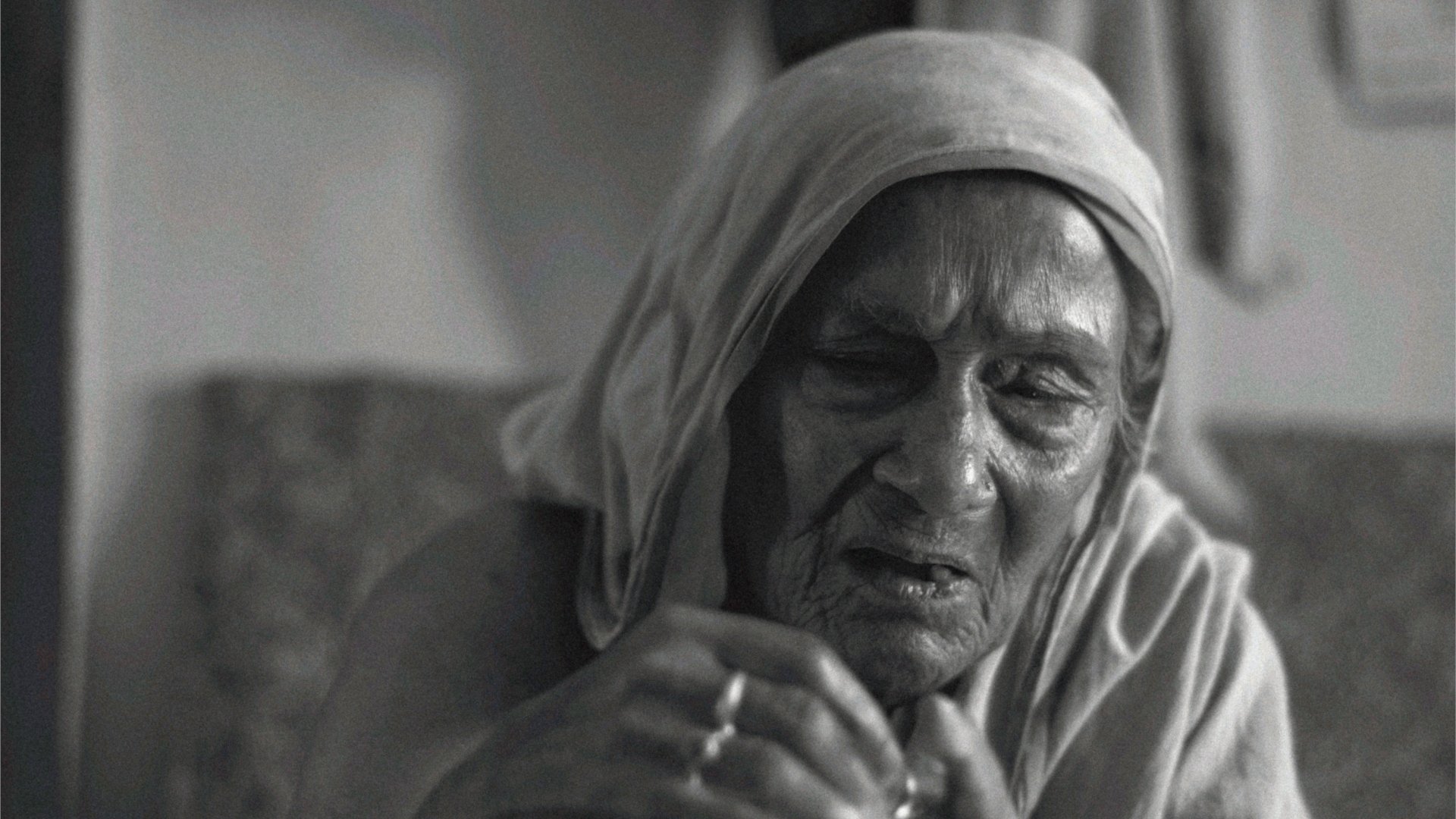
Musamoni never received schooling, and her early marriage brought her an early widowhood. Her anguish overflows as she sits down to narrate folklore and departure songs of the brides of patriarchy in the east of India.
Musamoni Panigrahi (1920s–2017), fondly called “Nani Ma” by her neighbours, appears in the centre of this first film in the Baleswari dialect of India's Odia language. The story revolves around folklore and folk songs narrated by Nani Ma. Born in the 1920s in pre-independent rural India in a coastal village in the Balasore district of Odisha, she never got to go beyond the first few days of school. The film is an alternate history of a society broken through colonization, Brahminical patriarchy and a post-famine (Orissa famine of 1866, killing nearly 5 million people, one-third of the population), and the dominance of formal writing over spoken tongues. Three academics -- Damayanti Beshra, PhD (recipient of India’s fourth civilian award, “Padma Shri”), Panchanan Mohanty, PhD (noted linguist), and Laxmikanta Tripathy, PhD, DLitt (anthropologist and author) -- also appear in the film to provide contextual commentary on patriarchy, oral history and the sociolinguistic diversity.
Ratings
0 fansNo ratings yet.
Reviews
If you liked Nani Ma, you might also like…
 92% match
 88% match
 85% match
 79% match
 75% match
 71% match
 70% match
 67% match
 64% match
 64% match
 60% match
 60% match
 60% match
 60% match
 60% match
 60% match
 60% match
 60% match
 60% match
 60% match